Back to portfolio
BC Public Service Agency

Reframing Service Demand Through Systems Thinking

Turning a website improvement project into an agency-wide service channel strategy

Service Design Research Content Strategy Stakeholder Alignment

Click map to view fullscreen

Employee HR Information-Seeking Journey How 40,000+ BC Public Service employees navigate HR support Need Arises "I need to know about jury duty leave" ! Ask Supervisor Supervisor doesn't know Creates cascading burden ! Search via Google Bypass site search Append "Careers & MyHR" ! Find Page Wrong terminology Skim past answer Give Up Submit AskMyHR ticket Wait 2+ weeks Success Found answer Self-serve Rare Common Key Friction Points Identified: Employees ask supervisors first — cascading support burden On-site search unreliable — employees bypass with Google Terminology mismatch ("jury duty" vs "juror summons") Inconsistent page structure — employees skim past answers Generic AskMyHR links without routing guidance Emotional Journey: Hopeful Frustrated Defeated

The Challenge

Service requests were climbing by up to 2,000 per month. Employees waited weeks for answers. Leadership wanted clearer website content. I reframed the problem.

40K+
Employees served
750
Pages audited
1,100
Survey responses
60+
Business areas aligned

How do employees go about finding answers to their HR related questions?

Rather than editing content immediately, I asked a different question. That shift expanded the scope and revealed a fragmented support ecosystem.

📊
Data Analysis
Analyzed service request patterns to identify top three buckets: time & leave, pay & benefits, career mobility
💬
Service Centre Interviews
Interviewed 5 reps who independently validated the same friction points without seeing the data
👥
Usability Sessions
Ran 8+ remote sessions revealing employees bypass the website and use Google instead
📋
Survey Validation
1,100+ responses confirmed observed behaviors at scale
"I would have given up searching long ago if you weren't watching."
— Usability session participant

What the Research Revealed

Search was broken
Employees used "jury duty" while pages said "juror summons." Keywords didn't match mental models.
Structure was inconsistent
750 pages lacked standard organization. Employees skimmed past answers they needed.
Routing was unclear
Generic "submit a request" links without guidance. Tickets went to wrong teams.

What I Built

Created a content completeness framework based on observed user behavior. It became the governance standard across 60+ business areas.

Framework applied to maternity leave page
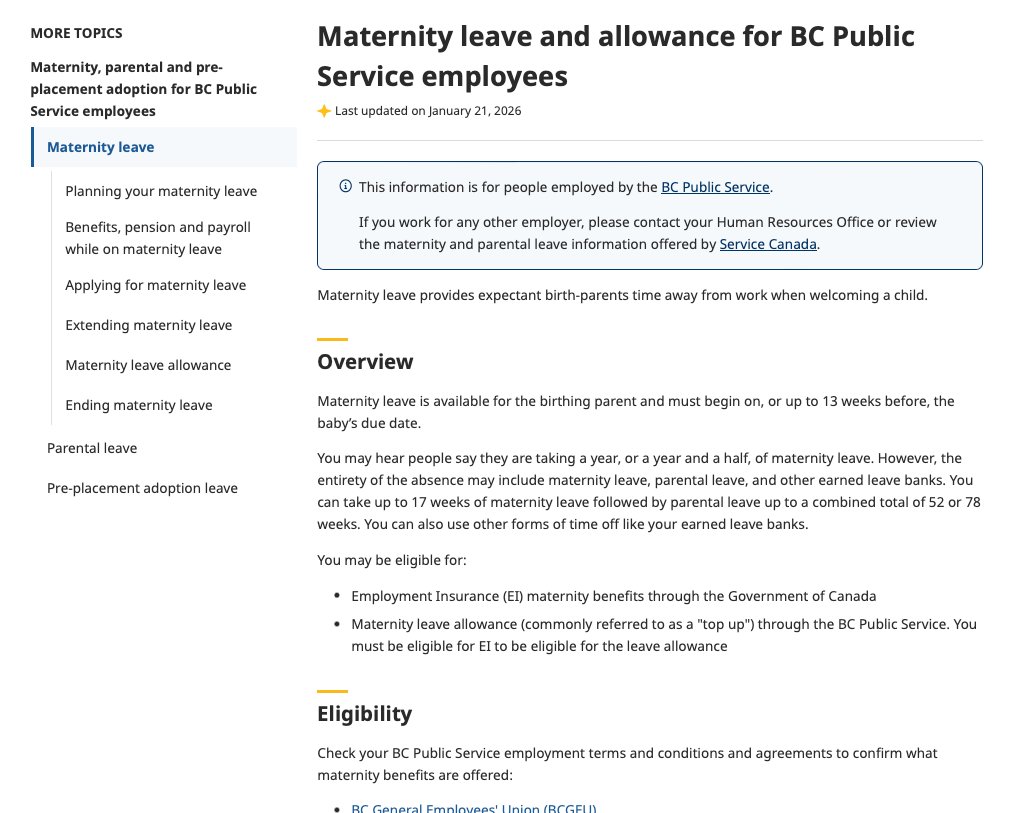
Content framework in action on maternity leave page
Overview
"Is this the right page for my question?"
Information
Core content in plain language, not policy-speak
Things to Consider
How it applies to their specific scenario
Resources
Forms and documents in one place
Contact
Who to reach, which system to use
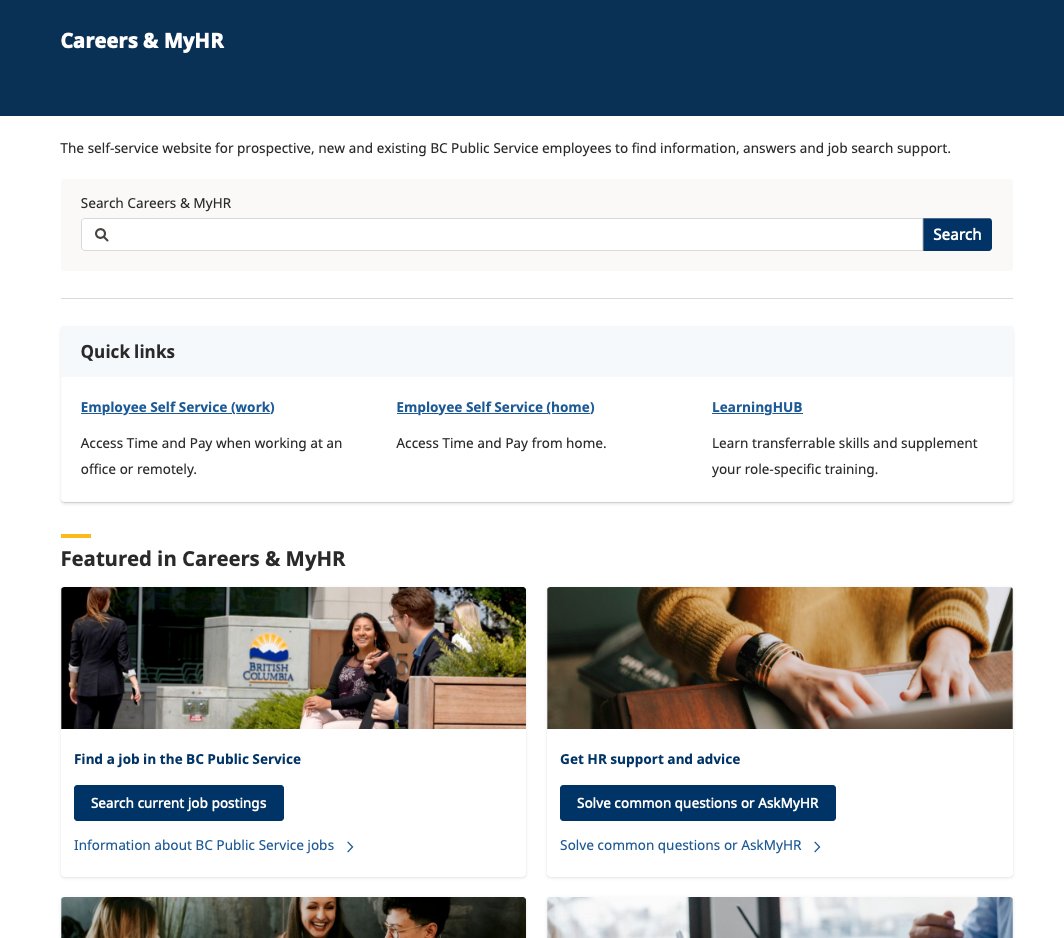
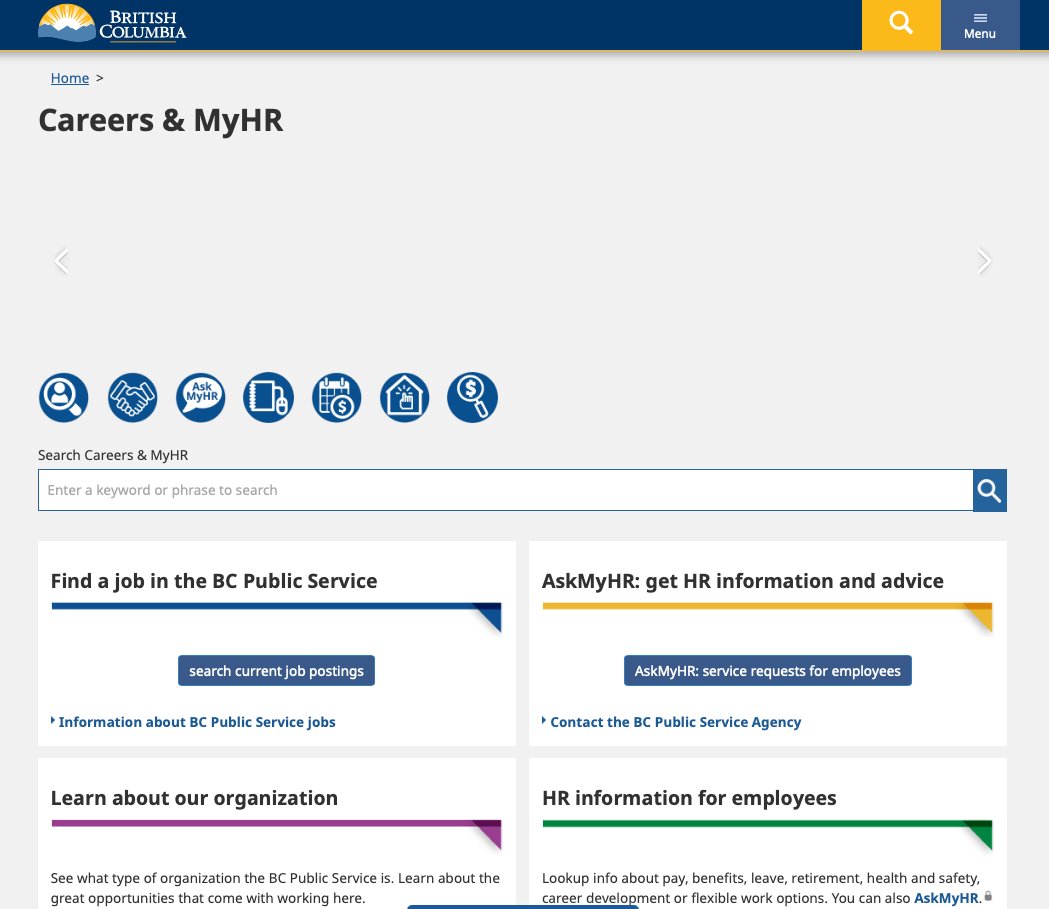
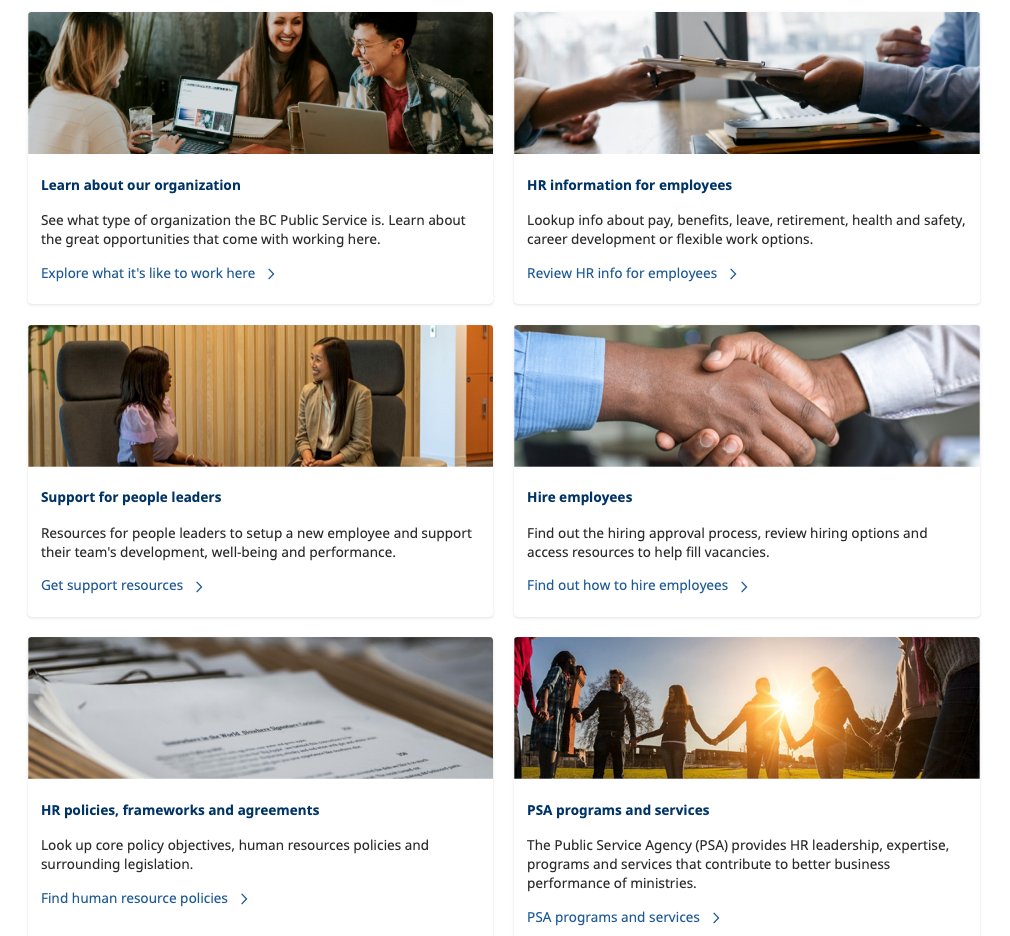
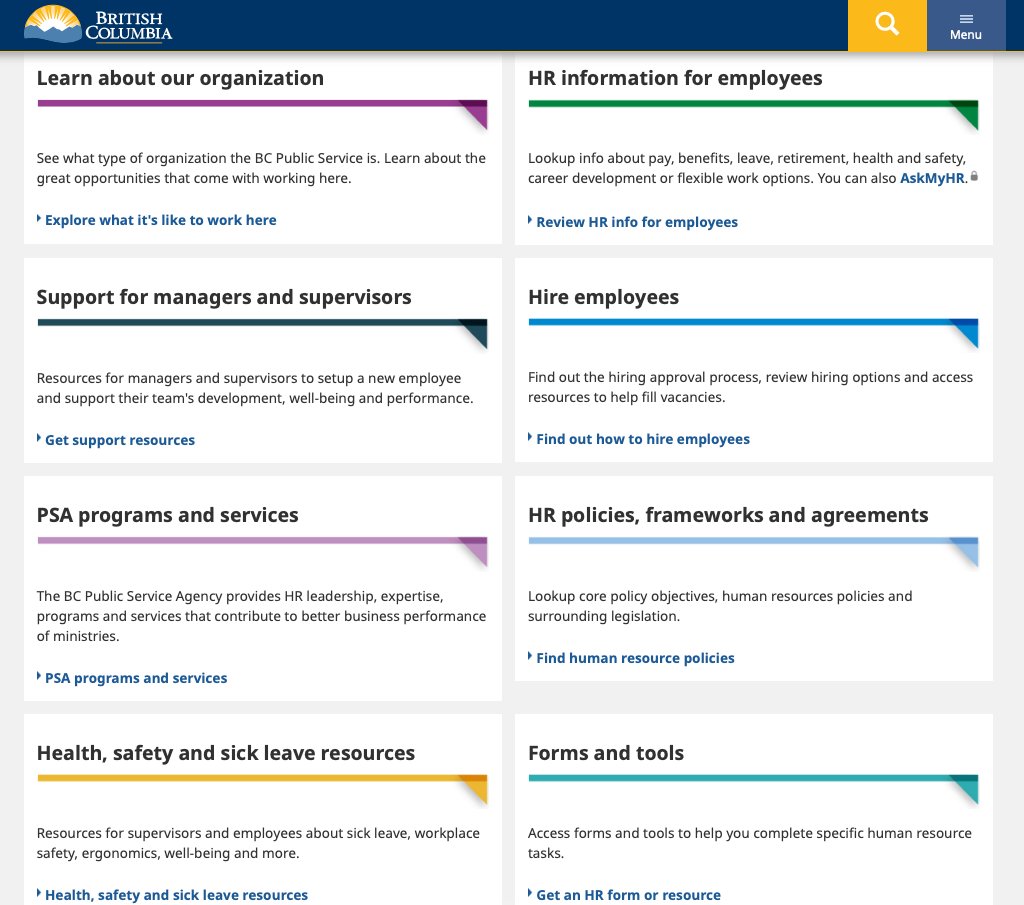
Homepage Redesign

Published the site's first-ever purpose statement, updated section labels to match employee mental models, and clarified the relationship between Careers & MyHR, the job board, and AskMyHR.

Drag slider to compare before and after

Above the fold — homepage hero and navigation

After redesign
Before redesign

Below the fold — content categories and featured sections

After redesign - lower section
Before redesign - lower section
Purpose Statement
"The self-service website for prospective, new and existing BC Public Service employees to find information, answers and job search support."
Labels Updated
"Support for people leaders" replaced "Support for managers and supervisors" to match how employees actually talk
Clarified Platforms
Made it clear that the job board and AskMyHR are separate systems, reducing persistent confusion

From Website Project to Agency-Wide Initiative

The research report reached directors and assistant deputy ministers (ADMs), becoming the foundation for an ongoing Service Channel Strategy initiative. The expanded scope was appropriate: fixing surface-level content wouldn't address the root causes I'd identified.

Governance Standard
Framework enforced across 750 pages and 60+ business areas
Search Improvements
Keyword audit matched employee language to page content
Strategic Influence
Shifted initiative from content updates to service channel strategy